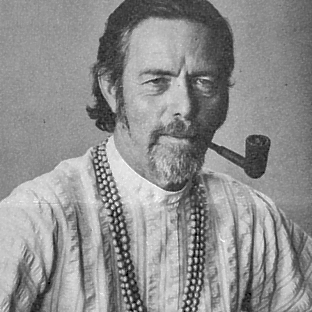
The Illusion of Meaning: A Journey Beyond Assumptions
Alan Watts provocatively asserts that many individuals lead their lives under the assumption that existence inherently possesses a definitive meaning. This notion, while seemingly benign, can lead to a profound disillusionment when the anticipated clarity fails to materialize. Watts invites us to reconsider our relentless pursuit of meaning, suggesting that it may not be as self-evident as we believe. This inquiry into the essence of life challenges us to explore the depths of our existence beyond mere assumptions.
In a world where the search for meaning often dominates our thoughts and actions, Watts's insight serves as a crucial reminder. The quest for significance can become a source of anxiety and frustration, as we grapple with the weight of expectations—both our own and those imposed by society. By recognizing that meaning is not a fixed destination but rather a fluid concept, we open ourselves to a richer, more nuanced experience of life. This perspective encourages us to embrace uncertainty and to find value in the journey itself, rather than fixating solely on the destination.
The image / the metaphor
Watts's statement, "It is not so obvious," evokes a sense of ambiguity and complexity surrounding the search for meaning. The phrase suggests that the answers we seek are often obscured by layers of assumptions and societal conditioning. The use of the word "supposing" implies a tentative grasp on reality, highlighting the fragility of our beliefs about existence. This imagery invites us to reflect on the nature of our understanding, urging us to question the validity of our convictions and to explore the depths of our consciousness.
Diving deeper into the metaphor, we can see that Watts is not merely critiquing the search for meaning; he is inviting us to engage with the essence of existence itself. The metaphor of "spending tremendous lives" suggests a profound investment of time and energy into a pursuit that may ultimately be misguided. This imagery resonates with the Zen concept of "sunyata," or emptiness, which teaches that clinging to fixed notions of meaning can lead to suffering. By letting go of our rigid expectations, we can cultivate a more fluid understanding of life, one that embraces the mystery and uncertainty inherent in our existence.
In the speaker's tradition
Alan Watts, a prominent figure in the popularization of Eastern philosophy in the West, draws heavily from Zen Buddhism and Taoism. Central to these traditions is the concept of "dharma," which refers to the natural order of the universe and our place within it. Watts's assertion challenges the conventional understanding of dharma as a prescriptive set of rules or meanings, suggesting instead that it is an invitation to experience life as it unfolds. This perspective aligns with the Zen practice of "koan," where practitioners are encouraged to confront paradoxes that defy logical reasoning, ultimately leading to deeper insights.
A relevant text that echoes Watts's sentiment is the "Heart Sutra," which emphasizes the idea of "form is emptiness, and emptiness is form." This profound teaching invites us to recognize that our rigid attachments to meaning and identity are ultimately illusory. By embracing the emptiness at the core of our existence, we can transcend the limitations of our assumptions and engage with life in a more authentic and liberated manner. Watts's insights resonate deeply with this Zen understanding, encouraging us to explore the richness of experience beyond the confines of fixed meanings.
Living the teaching
Consider a modern scenario where the pursuit of meaning manifests in the workplace. Many individuals invest their lives in careers, believing that success and fulfillment are synonymous with climbing the corporate ladder. However, this relentless pursuit often leads to burnout and dissatisfaction when the anticipated rewards fail to materialize. By embracing Watts's teaching, one might shift their focus from seeking external validation to finding joy in the process of work itself. This shift allows for a more profound engagement with the present moment, fostering creativity and connection rather than anxiety and competition.
In the realm of relationships, Watts's insights can also provide a transformative lens. Often, individuals enter partnerships with preconceived notions of what love should look like, leading to disappointment when reality diverges from expectation. By letting go of rigid definitions and embracing the fluidity of connection, one can cultivate a deeper appreciation for the unique dynamics of each relationship. This approach encourages open communication and vulnerability, allowing love to flourish in its authentic form rather than being constrained by societal ideals.
A reflection
As we contemplate Watts's assertion that life may not possess an obvious meaning, we are invited to engage in a deeper inquiry about our own assumptions. What if the search for meaning is not the ultimate goal, but rather a distraction from the richness of the present moment? In light of this, consider this contemplative question: How might your life change if you embraced the uncertainty of existence, allowing yourself to experience each moment without the burden of seeking a definitive meaning?




Join the BrightStar Community
Stay connected with daily inspiration, event announcements, and community wisdom